
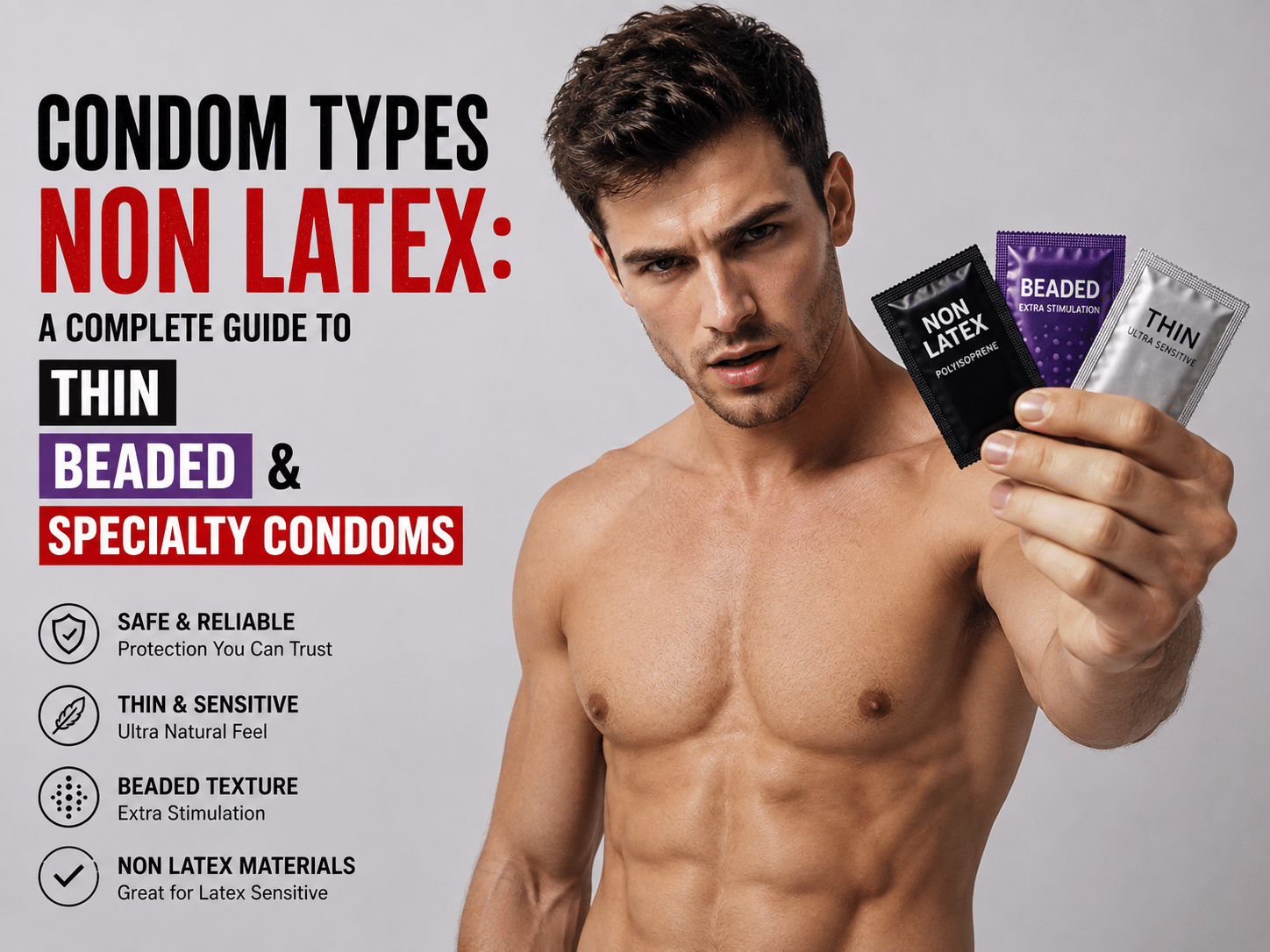
How to Choose Between Condom Types Non Latex, Thin Condoms, and Beaded Condoms
Choosing a condom is not simply about picking the first package available. Different materials, thicknesses, textures, shapes, and lubrication options can create very different experiences. Understanding the major condom types non latex available today makes it easier to select an option that fits personal preferences while keeping protection and product quality at the center of the decision.
Non-latex condoms are particularly useful for people who experience latex sensitivity or prefer alternatives to natural rubber latex. Common external condom materials include polyurethane and polyisoprene, while internal condoms are made from nitrile. The CDC notes that polyurethane condoms can provide protection against STIs, HIV, and pregnancy comparable to latex condoms, while other synthetic materials may have different evidence and labeling.
Thin condoms appeal to people who want a lighter, less noticeable barrier, while beaded condoms and other textured designs focus on additional physical sensation. These categories are not necessarily mutually exclusive, meaning a product can combine a non-latex material with a thin construction or a textured surface. The most important consideration is choosing a product that is appropriately regulated, correctly sized, intact, and used according to its package instructions.
This guide explains how condom types non latex differ from conventional latex options, how thin condoms are designed, what makes beaded condoms different, and which factors should be considered before buying. It also covers material compatibility, lubrication, sizing, storage, expiration dates, and practical safety considerations so shoppers can make more informed decisions.
1. Why Understanding Condom Types Non Latex Helps You Choose More Confidently
Understanding condom types non latex begins with recognizing that “non-latex” describes the material rather than one specific style. Polyurethane and polyisoprene are two important materials used in external condoms, while nitrile is used in internal condoms. Their physical characteristics can differ, so comparing the material, intended use, and product labeling is more useful than assuming every non-latex condom behaves identically.
Polyurethane condoms are particularly important for people looking for a latex alternative. CDC guidance states that polyurethane external condoms provide protection against STIs, HIV, and pregnancy comparable to latex condoms. They can also be used with both oil-based and water-based lubricants, although shoppers should still follow the specific product’s instructions.
Polyisoprene provides another synthetic option for people who want to avoid natural rubber latex. However, material alone should never be treated as a guarantee of identical performance across brands. Product-specific instructions, regulatory labeling, expiration dates, and storage requirements remain important when comparing different condom types non latex.
Understanding the material also helps prevent a common purchasing mistake: treating natural-membrane condoms as equivalent to synthetic non-latex condoms for STI protection. Natural-membrane condoms can help prevent pregnancy but do not provide the same protection against HIV and other STIs because of their microscopic pores.
1.1 How Polyurethane and Polyisoprene Differ From Latex
Polyurethane is a plastic material that can be used to manufacture external condoms. It provides a thin barrier and is an established alternative for people who need to avoid latex. According to CDC guidance, polyurethane condoms provide protection against STIs, HIV, and pregnancy comparable to latex condoms.
Polyisoprene is a synthetic rubber material that does not contain natural rubber latex proteins. It offers another option for people who want a latex-free product while preferring a material with a different feel from polyurethane. The exact characteristics can vary by manufacturer, so packaging information should always be checked before use.
Latex remains widely used because of its established effectiveness and protective performance. The availability of condom types non latex does not mean that non-latex products are automatically better; instead, they provide additional choices for people with sensitivities, preferences, or specific product requirements.
Natural-membrane condoms should be considered separately from synthetic non-latex condoms. Although they are sometimes marketed using terms such as “natural” or “lambskin,” CDC guidance states that they should not be relied upon for HIV or STI prevention.
1.2 Which Non Latex Condom Features Matter Most When Shopping
Material is only one part of the selection process. Size, shape, thickness, lubrication, texture, and intended use all affect the overall experience. A well-fitting condom is more likely to stay in place and remain comfortable, making fit one of the most important considerations alongside material.
Thickness is another major category. Thin condoms are designed with less material while maintaining their intended barrier function. However, “thin” should not be interpreted as “less safe” when the product is properly manufactured, regulated, within its expiration date, and used correctly according to its instructions.
Texture provides a different type of design variation. Beaded condoms feature raised elements intended to create additional stimulation. Some products may combine texturing with other features, so shoppers should read the package carefully rather than assuming that every textured condom has the same construction.
Lubrication also deserves attention. Some condoms arrive pre-lubricated, while others may require additional compatible lubricant. Using the wrong lubricant can damage certain condom materials, so compatibility should always be confirmed from the manufacturer’s instructions before application.
1.3 Why Product Labeling and Regulatory Information Should Guide Your Choice
Product labeling provides important information that marketing descriptions may not explain clearly. Before purchasing condom types non latex, shoppers should check the material, size, expiration date, lubrication details, intended use, and storage instructions printed on the package.
Regulatory status is also relevant because condoms are medical devices in the United States. The FDA maintains classifications and regulatory information for condoms and related products, including non-latex materials and lubricant compatibility.
A product’s marketing language should never replace its official labeling. Terms such as “ultra thin,” “specialty,” or “enhanced texture” describe design characteristics but do not independently establish effectiveness. Reliable purchasing decisions come from combining product specifications with established safety guidance.
Checking packaging is especially important when buying online or from unfamiliar sellers. Look for intact individual wrappers, clear expiration information, manufacturer details, and instructions. A reputable seller and properly packaged product reduce the risk of purchasing items that have been stored incorrectly or are past their usable date.
2. How Thin Condoms Balance Minimal Thickness With Reliable Protection
Thin condoms are designed for people who prefer a lighter barrier and a more natural-feeling experience. Their construction uses less material while maintaining the specifications required for the particular product. The appeal is straightforward: reducing the physical presence of the condom can make it feel less noticeable without eliminating the protective barrier.
Thinness should not be confused with poor quality. A properly manufactured thin condom is still designed to perform its intended function when used correctly. The FDA describes external condoms as thin film sheaths placed over an erect penis and emphasizes correct use and single use.
Different materials can produce different sensations even when two condoms have similar thickness measurements. Polyurethane, polyisoprene, and latex each have their own physical characteristics, so shoppers should consider material and thickness together rather than selecting solely according to a “thin” label.
The ideal choice therefore depends on personal preference, material requirements, fit, and product instructions. For people exploring condom types non latex, thin polyurethane or other appropriately labeled synthetic options may provide an alternative to standard latex designs.
2.1 Which Features Make Thin Condoms Feel More Natural
Reduced thickness is the defining feature of thin condoms, but the overall experience also depends on fit and lubrication. A condom that fits securely and has adequate lubrication can feel less distracting than one that is too loose, too tight, or insufficiently lubricated.
Material can influence how a thin condom feels. Polyurethane, for example, has physical characteristics different from latex and may transmit heat differently. Polyisoprene offers another synthetic alternative with its own texture and elasticity.
Lubrication can further reduce friction and improve comfort. When additional lubricant is appropriate, choosing a product compatible with the condom material is essential. Manufacturer instructions should take priority because compatibility varies by material and product formulation.
A thin condom should still be treated with the same care as any other condom. It should be inspected before use, opened carefully without damaging the wrapper or condom, used once, and discarded afterward. FDA guidance specifically recommends using a new condom every time and using each condom only once.

2.2 Why Proper Fit Matters Even With Thin Condoms
A thin condom cannot compensate for an incorrect size. If a condom is excessively tight, it may feel uncomfortable, while an overly loose condom may shift during use. Selecting an appropriate size therefore contributes to both comfort and dependable use.
Manufacturers may provide measurements such as nominal width on the packaging. Comparing these specifications with the manufacturer’s sizing guidance can help shoppers identify an appropriate option rather than relying only on generic labels such as “standard.”
Fit becomes particularly important when comparing different condom types non latex because materials can stretch and behave differently. A size that feels appropriate in one material may not feel identical in another, making product-specific guidance useful.
Comfort should also be evaluated without sacrificing safety. If a condom repeatedly slips, breaks, causes irritation, or feels excessively restrictive, switching to a different size or product type is more sensible than continuing with an unsuitable option.
2.3 How Lubrication Influences Comfort and Condom Performance
Lubrication reduces friction and can make condom use more comfortable. The CDC recommends water-based or silicone lubricant to help prevent condom breakage and slipping, while specific compatibility depends on the condom material.
Polyurethane condoms have an important advantage in this area because CDC STI guidance states that they are compatible with both oil-based and water-based lubricants. Even so, checking the individual product instructions remains the safest approach because formulations and product designs can vary.
People comparing thin condoms should pay particular attention to lubrication instructions. Excessive friction can affect comfort and may contribute to condom failure, so using an appropriate amount of compatible lubricant can be an important part of responsible use.
Lubricant should also be selected according to the condom rather than simply according to preference. FDA information notes that lubricants may have specific compatibility with natural rubber latex, polyisoprene, polyurethane, or other condom materials.
3. Why Beaded Condoms Offer a Different Textured Design
Beaded condoms belong to the broader category of textured condoms. Their defining feature is the presence of raised bead-like elements on the exterior surface, designed to create a different sensory experience compared with smooth condoms. Texture can vary considerably between products, so the size, placement, and pattern of the raised elements are important details to examine.
The purpose of a textured design is primarily sensory rather than contraceptive. Beads, ribs, dots, and other raised patterns can change the surface characteristics of a condom, offering an alternative to smooth designs. The underlying protective function still depends on the condom being an appropriate, properly manufactured product and being used correctly.
Not every beaded condom has the same construction or texture. Some designs use small raised elements distributed across the surface, while others combine beads with ribs or other patterns. This variety allows consumers to choose according to personal preference and comfort.
Texture should never override safety considerations. A product should come from a reputable manufacturer, have clear instructions and expiration information, and be used exactly as directed. If a particular textured design causes pain, irritation, or discomfort, it should be discontinued.
3.1 How Beaded Condoms Differ From Smooth and Ribbed Designs
Smooth condoms have a relatively uniform exterior surface, making them the simplest texture category. They are often selected by people who prefer minimal surface variation and a familiar design.
Ribbed condoms use raised lines or rings to create a patterned texture. Beaded condoms, by contrast, use discrete raised points or bead-like structures. Some products combine both approaches, creating a more complex surface pattern.
The distinction matters because texture affects the physical characteristics of the condom. A consumer who prefers subtle texture may favor a lightly ribbed design, while someone seeking a more noticeable pattern may prefer a beaded or heavily textured option.
Regardless of the texture, the basic safety principles remain unchanged. The condom should be within its expiration date, stored correctly, applied according to instructions, and used only once. CDC guidance emphasizes consistent and correct condom use for reducing the risk of HIV and other STIs.
3.2 Which People May Prefer Textured Condom Designs
Preferences for textured condoms vary considerably. Some people prefer smooth products because they feel simple and unobtrusive, while others enjoy experimenting with different surface designs. Beaded condoms can appeal to consumers who specifically want a more textured alternative.
Communication between partners is important when trying a new product. A new texture can feel different from a smooth condom, so choosing a product together can make the experience more comfortable and mutually enjoyable.
Sensitivity also matters. A more pronounced texture is not automatically better for everyone. If a textured product creates discomfort or irritation for either partner, a smoother or less pronounced design may be more appropriate.
People with sensitive skin should pay attention to the entire product specification rather than focusing only on the texture. Material, lubricant, added fragrances, and other ingredients may all influence comfort. When irritation occurs, discontinue use and consider seeking medical advice if symptoms persist.
3.3 Why Beaded Condoms Should Be Selected for Quality as Well as Texture
A visually distinctive product is not necessarily a high-quality product. When shopping for beaded condoms, quality indicators such as clear packaging, manufacturer information, expiration dates, and appropriate regulatory labeling deserve as much attention as the texture itself.
Consumers should avoid relying solely on dramatic marketing claims. Terms describing sensation or texture do not establish contraceptive or STI-prevention performance. Those functions depend on the product’s intended use, manufacturing quality, and correct application.
Storage is another important consideration. Condoms should be protected from excessive heat, moisture, and physical damage. CDC guidance specifically advises against storing condoms in very hot locations such as cars.
Ultimately, texture should be treated as a preference rather than a substitute for safety. A well-selected beaded condom combines an acceptable texture with appropriate material, reliable packaging, correct fit, and clear instructions.
4. How to Compare Condom Types Non Latex, Thin Condoms, and Beaded Condoms
Comparing condom categories becomes easier when the decision is divided into material, thickness, texture, fit, lubrication, and intended use. Condom types non latex primarily address material preferences or latex sensitivity, while thin condoms focus on reduced thickness and beaded condoms emphasize texture.
These categories can overlap. A single product may be non-latex, thin, and textured at the same time. Therefore, shoppers should not assume that choosing one category automatically excludes another. Reading the product specifications provides a clearer picture of what a particular condom actually offers.
The best choice is not necessarily the product with the most features. A simple condom that fits well and meets personal material requirements may be more suitable than a heavily textured or highly specialized product that causes discomfort.
Safety remains the foundation of every comparison. CDC guidance emphasizes correct and consistent use, while FDA guidance recommends checking expiration dates, using a new condom each time, and using each condom only once.
4.1 Which Condom Features Should You Compare Before Buying
Start with material. People who need to avoid natural rubber latex should look for clearly identified synthetic options such as polyurethane or polyisoprene. Product labeling should be checked carefully because “natural” does not necessarily mean latex-free synthetic protection.
Next, consider thickness. Thin condoms may appeal to people who want a less noticeable barrier, while standard-thickness options may be preferred by consumers who value familiarity. Thickness should be considered alongside material and fit rather than treated as the only purchasing criterion.
Texture comes next. Beaded condoms, ribbed condoms, and smooth condoms provide different surface designs. Personal preference and comfort should determine the choice rather than assuming one texture is universally superior.
Finally, review size, lubrication, expiration date, storage instructions, and intended use. These practical details often have a greater impact on successful condom use than marketing claims or packaging aesthetics.
4.2 Why Storage, Expiration Dates, and Packaging Matter
Condoms can deteriorate when exposed to unsuitable conditions. Heat, friction, moisture, and prolonged storage can affect the integrity of the product. Keeping condoms in a cool, dry location and following the manufacturer’s storage instructions helps protect their quality.
Expiration dates should always be checked before use. FDA guidance specifically recommends avoiding expired condoms and using a new condom each time.
The individual wrapper should also be inspected for visible damage. A torn, punctured, or otherwise compromised package should not be used. Opening the wrapper carefully helps prevent accidental damage to the condom itself.
These precautions apply equally to condom types non latex, thin condoms, and beaded condoms. Specialty features do not remove the need for basic product-care practices.
4.3 How to Use Specialty Condoms Responsibly and Comfortably
Responsible use begins with selecting a product intended for the activity and following the manufacturer’s instructions. The condom should be applied before sexual contact, used only once, and discarded afterward. FDA guidance confirms these basic use principles for external condoms.
Using two condoms at the same time is not recommended because additional layers can increase friction rather than improve protection. CDC educational guidance specifically advises against using two condoms at once.
Lubrication should be compatible with the specific condom material. This is especially important when comparing different condom types non latex, because lubricant compatibility can vary. When in doubt, the manufacturer’s package instructions should be followed.
Finally, comfort should remain part of the decision. If a product causes pain, burning, itching, or other irritation, stop using it. Persistent or severe symptoms warrant advice from a qualified healthcare professional. Choosing the right condom should combine protection, fit, material compatibility, and comfort rather than focusing on novelty alone.
Conclusion
Understanding the differences between condom types non latex, thin condoms, and beaded condoms makes shopping more informed and purposeful. Non-latex options such as polyurethane and polyisoprene provide alternatives for people who want to avoid natural rubber latex, while thin designs focus on a less noticeable barrier and beaded designs introduce additional texture.
The most important decision is not simply choosing the most specialized product. Material, fit, lubrication compatibility, expiration date, storage conditions, and correct use all contribute to a safer and more comfortable experience. CDC guidance confirms that appropriate non-latex options can provide important protection, while natural-membrane condoms should not be relied upon for HIV or STI prevention.
Whether someone prefers the subtle construction of thin condoms, the distinctive texture of beaded condoms, or the material benefits of condom types non latex, the right product should come from a reputable source and match the user’s needs. Reading the package carefully and following the manufacturer’s instructions helps turn a complicated selection into a straightforward decision.
A thoughtful approach to condom shopping combines personal preference with evidence-based safety. By comparing materials, textures, thicknesses, sizing, and lubrication requirements, consumers can choose products that better match their comfort and protection needs.
10 FAQs
1. Why are condom types non latex useful?
Condom types non latex provide alternatives for people who want to avoid natural rubber latex. Common external materials include polyurethane and polyisoprene, while internal condoms use nitrile.
2. How are thin condoms different from regular condoms?
Thin condoms use a thinner barrier construction designed to provide a less noticeable feel while maintaining the product’s intended protective function when used correctly.
3. Which materials are used in non latex condoms?
Common external non-latex materials include polyurethane and polyisoprene. Internal condoms are made from nitrile. Natural-membrane condoms are a separate category and should not be treated as equivalent to synthetic non-latex condoms for STI protection.
4. How do beaded condoms differ from ribbed condoms?
Beaded condoms use raised bead-like elements, while ribbed condoms generally use raised lines or rings. Some specialty products combine multiple textures.
5. Why should lubricant compatibility be checked?
Certain lubricants can damage particular condom materials. Checking the manufacturer’s instructions helps ensure that the selected lubricant is compatible with the condom being used.
6. Which non latex condoms protect against STIs?
Polyurethane external condoms provide protection against STIs and HIV comparable to latex condoms when used correctly. Natural-membrane condoms should not be used for HIV or STI prevention.
7. How should thin condoms be stored?
Store condoms according to the manufacturer’s instructions in a cool, dry location away from excessive heat and physical damage. Condoms should not be kept in very hot places such as cars.
8. Why is condom size important?
Proper sizing helps improve comfort and reduces the likelihood of slipping or excessive tightness. Manufacturer sizing information is the best starting point when selecting a new product.
9. Which condom should be chosen for sensitive skin?
Material and lubricant ingredients should both be considered. People with known latex sensitivity may consider appropriately labeled non-latex products, while anyone experiencing persistent irritation should consult a healthcare professional.
10. How often should condoms be replaced?
A condom should be used only once and replaced with a new one for every act of sexual intercourse. Expired, damaged, or compromised condoms should not be used.